Tuesday, July 23, 2024

What Questions Should You Ask Your Lender?

What Questions Should You Ask Your Lender?

Embarking on the journey to homeownership in the Dallas-Fort Worth area involves several crucial steps, with securing a mortgage being one of the most significant. The relationship you build with your lender is instrumental in making this process smooth and successful.

To ensure you’re well-informed and confident in your decision, it’s essential to ask the right questions. Here are key questions you should ask your lender to make informed decisions about your mortgage:

1. What Types of Loans Do You Offer? Understanding the various loan options available is crucial for finding the one that best suits your financial situation. Ask your lender about the types of mortgages they offer, including fixed-rate mortgages, adjustable-rate mortgages (ARMs), FHA loans, VA loans, and other specialized programs.

2. What is the Interest Rate and APR? While the interest rate is a critical factor, the Annual Percentage Rate (APR) provides a more comprehensive view of the overall cost of your mortgage. Ask your lender for both figures and inquire about any potential changes to the interest rate over the life of the loan for adjustable-rate mortgages.

3. What Down Payment is Required? Understanding the required down payment is essential for budgeting and planning your home purchase. Inquire about any down payment assistance programs or options for lower down payments, especially if you’re a first-time homebuyer.

4. What Are the Closing Costs? Closing costs can add a significant amount to your overall expenses. Ask your lender for a detailed breakdown of the closing costs, including any fees associated with loan origination, appraisal, title search, and other closing-related expenses.

5. What Documents Do You Need for Pre-approval? Getting pre-approved for a mortgage is a crucial step in the homebuying process. Ask your lender about the necessary documentation for pre-approval, which may include proof of income, employment verification, and details about your assets and debts.

6. What is the Loan Estimate? The Loan Estimate is a standardized form that provides a snapshot of the terms and costs of your loan. Ask your lender for a Loan Estimate, which includes important details such as the loan amount, interest rate, monthly payments, and closing costs.

7. Are There Penalties for Early Repayment? Understanding the terms of your mortgage is essential, and this includes knowing if there are any penalties for paying off your loan early. Some loans may have prepayment penalties, so inquire about this to avoid any surprises down the road.

8. How Long Will the Approval Process Take? Timing is crucial in real estate transactions. Ask your lender about the expected timeline for the mortgage approval process, including the time it takes to underwrite the loan and receive final approval.

9. What Happens if I Can’t Make a Payment? Life is unpredictable, and it’s crucial to understand the lender’s policies regarding missed payments. Ask about late fees, grace periods, and any options available to you if you encounter financial difficulties.

10. Can I Lock in the Interest Rate? Interest rates fluctuate, and it’s essential to know if your lender offers the option to lock in your interest rate. If so, inquire about the terms and conditions of rate locks to secure a favorable rate for your mortgage.

By asking these key questions, you empower yourself to make informed decisions about your mortgage, ensuring that you choose a loan that aligns with your financial goals and needs. Open communication with your lender is crucial throughout the homebuying process. If you need lender recommendations, please don’t hesitate to reach out and I’ll send you some!


Friday, July 19, 2024

Answers to Five Common Questions about Credit Scores and Buying a Home


Even if you’re waiting for mortgage rates to drop before buying a home, there’s one thing you could be doing right now to help your chances of successfully buying in the future: improving your credit score. Your credit score plays a major role in your ability to get a mortgage, as well as your interest rate.

But how does a credit score impact your ability to buy a home? Why is it important? And how can you boost your score before buying a home and save money over the course of your loan as a result?

A recent article from Realtor.com outlined frequently asked questions about credit scores, including:

1. Why Does Your Credit Score Matter Before Buying a Home?

Your credit score is based on your credit history, and it gives lenders a clear picture of how effectively you’ve managed credit and payments in the past. This helps them determine how likely you are to effectively manage your mortgage payments in the future. A strong credit score indicates reliability, which can increase your chances of securing a mortgage.

2. How Does Your Credit Score Affect Your Mortgage?

The higher your credit score, the better you’ve managed your credit and payments, making it more likely for a lender to not only approve you for a mortgage but also offer you a competitive interest rate and favorable loan terms. For example, a higher credit score can result in significantly lower monthly payments and reduced interest over the life of the loan. In the Fort Worth real estate market, having a good credit score can make a substantial difference in affordability.

3. How Can You Boost Your Credit Score?

If you want to improve your credit score before buying a home, it’s extremely important to pay all of your bills on time. Consistent on-time payments are a major factor in boosting your credit score. Additionally, paying off debt and asking for a credit line increase can improve your credit utilization rate. These steps can make a significant difference when you’re preparing to buy a home in the competitive Dallas Fort Worth real estate market.

4. How Long Before Buying a Home Should You Start Working on Your Credit Score?

Ideally, you should start working on your credit score at least six months to a year before you plan to buy a home. This gives you enough time to see significant improvements. According to Experian, it takes about three to six months of good credit behavior to see a noticeable change in your credit score. The earlier you start, the better positioned you’ll be when you’re ready to enter the Fort Worth housing market.

5. What Credit Score is Needed to Buy a Home?

The credit score needed to buy a home can vary depending on the type of loan and the lender. Generally, a score of 620 is considered the minimum for a conventional loan, while FHA loans may accept scores as low as 580. However, having a higher score will always benefit you in terms of loan options and interest rates. According to the Federal Housing Administration, buyers with a credit score above 700 tend to receive the most favorable terms.

Final Thoughts

Improving your credit score is a critical step in preparing to buy a home. By understanding how your credit score affects your mortgage options and taking steps to boost it, you can position yourself for success in the Dallas - Fort Worth real estate market. Having a strong credit score will help you secure the best possible terms for your mortgage.

By focusing on your credit score now, you can ensure a smoother, more affordable home-buying process in the future. Happy house hunting!

Ready to start your home-buying journey? Contact DFW Elite Realty for expert advice and personal service in the Dallas Fort Worth metroplex. 

5 Tips to Take the Stress Out Of Moving


In many ways, moving to a new home can be fun and exciting for many people, but the actual moving part of the experience isn’t something most people enjoy.

Moving day is stressful for many reasons, such as:

  • It takes time many people don’t have to spare. Ideally you can take some time off of work in order to move from one home to another. But life doesn’t entirely stop just because you’re moving, so a lot of what needs to get done has to happen around your work schedule, and other obligations.
  • It’s difficult to time everything perfectly. Whether you rent or own a home, it can be almost impossible to line up the day you need to be out of one place and the day you can move into the next. But even if you manage to time that part well, lining up movers or helpers for a particular day can be tricky.
  • Something is bound to go wrong. It doesn’t matter how well you plan your move, there’s a good chance something isn’t going to go according to plan.
  • It’s tiring and can even be painful. It’s pretty much a guarantee that you’ll need a good night’s sleep once moving day is done, but you might also need to see a chiropractor or massage therapist as well!

So, if you’re dreading your next move, it’s understandable.

However, according to this recent article, there are some people who enjoy moving, and embrace the process! Lemonade Insurance recently commissioned a study conducted by Talker Research which found that nearly 60% of Gen Z respondents enjoy the process of moving, versus only about 20% of those in the Baby Boomer generation for comparison sake.

While some of that might be chalked up to age differences, it probably doesn’t hurt that Gen Z’ers appear to be better at planning their move than any other generation represented in the survey.

So, let’s take a look at 5 things the survey found that you should plan on, in order to make your move more enjoyable… or at least a little less stressful.

1) Plan on Spending More than You Think It’ll Cost

Out of all generations, more Gen Z respondents focused on their budget, with 60% of them saying that they deliberately set aside money to fund their move.

However, even with careful planning, 80% of all people surveyed said that they exceeded their moving budgets by an average of $1,057.20. That said, even though it took five months to financially recover from their most recent move, 47% of them said they’d be willing to overpay if it meant they could avoid having issues during their move.

To be safe and set yourself up for less stress, put money aside to fund your move, and budget more than you think it will cost.

2) Plan on Updating Your Information With Companies

There’s a lot to remember and do when moving from one home to another, so it’s easy for something to get lost in the shuffle.

According to the study, the two most common things to fall through the cracks were:

  1. Forgetting to update their address.
  2. Forgetting to have their mail forwarded.
  3. Forgetting to update their homeowners or renters insurance.

Before moving day, make a list of every company you do business with and make sure to either call them, or go online and update your contact information.

3) Plan on Packing Ahead of Time

A Quarter of the people in the study said that the time and effort of packing was the most frustrating and stressful part of moving.

Forty-eight percent of those surveyed started packing up their belongings two weeks or less before the actual moving day, and 63% felt that the packing process should ideally start more than three weeks before moving day.

You can lower your stress levels by packing up things you don’t need on a daily basis as far ahead of time as possible. While you’re at it, take the opportunity to get rid of things you no longer need and donate them, or throw them away.

4) Plan on Making a… Playlist?!

Forty percent of Gen Z claimed that creating a fun playlist was a key factor in making moving day more enjoyable!

It may seem like unconventional advice, but setting some time aside to curate the perfect list of songs might help you to stay upbeat and motivated even when the day drags on, or things aren’t going as smoothly as you’d like.

5) Plan Some Recovery Time

According to the survey, on average it took three months to mentally and emotionally recover, and two months to physically recover after moving. Many people blamed the overall chaos of moving for taking a toll on their everyday habits and found that they were sleeping less, eating more junk food, and having lower moods for some time after moving.

Don’t be surprised if you feel out of sorts even days or weeks after moving day. But knowing that your mind and body will need some TLC ahead of time might be the key to shortening how long it impacts you. Try to factor in some time to decompress and relax after moving in, but also try to get back in the swing of your typical habits and schedule as soon as possible to avoid feeling like you’re still in chaos months later.

The Takeaway:

Moving can be fun and exciting, but the actual process is often stressful. It’s time-consuming, hard to time perfectly, and things rarely go as planned. Plus, it’s physically exhausting. However, a recent study by Lemonade Insurance found that almost 60% of Gen Z enjoys moving, compared to only 20% of Baby Boomers. Gen Z’s better planning might explain their enjoyment. Here are five tips from the study to make moving less stressful:

  1. Budget more than you expect the move to cost.
  2. Change your address and update your contact information with every company you do business with.
  3. Start packing at least 3 weeks in advance, and use it as a chance to declutter.
  4. Create a fun playlist to keep you motivated and make the day more enjoyable.
  5. Plan some recovery time for yourself after moving day, but try to get back to your normal routine as soon as possible to avoid prolonged chaos.

How to Navigate the Summer Real Estate Market as a Buyer


The summer real estate market can be competitive and fast-paced, but with the right strategies, buyers can find and secure their dream home. Here are some tips to help you navigate this busy season effectively.

Pre-Approval is Key

One of the first steps in the home-buying process is getting pre-approved for a mortgage. This not only helps you understand your budget but also shows sellers that you are a serious and qualified buyer. Pre-approval can give you an edge in competitive situations where multiple offers are on the table. According to the National Association of Realtors, pre-approved buyers are more likely to secure their desired home compared to those who are only pre-qualified.

Act Quickly

In a hot market, desirable properties can sell quickly. When you find a home that meets your needs, be prepared to act fast. Schedule viewings as soon as possible and be ready to make an offer promptly. Delays can result in missed opportunities. The average time a home stays on the market during summer can be as short as 30 days, according to Realtor.com, emphasizing the need for swift action.

Flexible Viewing Schedules

Flexibility is important when viewing homes in a competitive market. Try to accommodate viewings during weekdays or early mornings if possible. This flexibility can sometimes give you a first look at new listings before the weekend rush. Being among the first to view a property can make a significant difference, especially in desirable neighborhoods like Haslet, Keller, and Southlake.

Competitive Offers

To stand out, make a competitive offer. This could include offering a higher earnest money deposit, being flexible with the closing date, or including an escalation clause in your offer. Work with your real estate agent to understand the best strategies for your specific situation. In the Dallas Fort Worth real estate market, a strong offer can often make the difference between securing your dream home and losing out to another buyer.

Consider Off-Market Listings

Off-market listings, also known as pocket listings, are homes that aren’t advertised widely. Working with a real estate agent who has a good network can help you find these hidden gems. This can give you access to properties that other buyers might not know about. According to Zillow, off-market deals can sometimes offer better prices and less competition, making them an excellent option for savvy buyers.

Final Thoughts

Navigating the summer real estate market requires preparation, speed, and a good strategy. By getting pre-approved, acting quickly, being flexible, making competitive offers, and considering off-market listings, you can increase your chances of finding and securing your dream home. Whether you’re looking in Fort Worth, Haslet, Keller, Justin, Southlake, Westlake, or Trophy Club, these tips will help you succeed in the fast-paced summer market.

By implementing these strategies, you can navigate the summer real estate market with confidence and efficiency, ensuring you don’t miss out on the perfect home for you and your family. Happy house hunting!

Ready to find your dream home? Contact DFW Elite Realty for expert advice and personal service in the Dallas Fort Worth metroplex.

Unlocking Homebuyer Opportunities in 2024

There’s no arguing this past year has been difficult for homebuyers. And if you’re someone who has started the process of searching for a home, maybe you put your search on hold because the challenges in today’s market felt like too much to tackle. You’re not alone in that. A Bright MLS study found some of the top reasons buyers paused their search in late 2023 and early 2024 were:

  • They couldn’t find anything in their price range
  • They didn’t have any successful offers or had difficulty competing
  • They couldn’t find the right home

If any of these sound like why you stopped looking, here’s what you need to know. The housing market is in a transition in the second half of 2024. Here are four reasons why this may be your chance to jump back in.

1. The Supply of Homes for Sale Is Growing

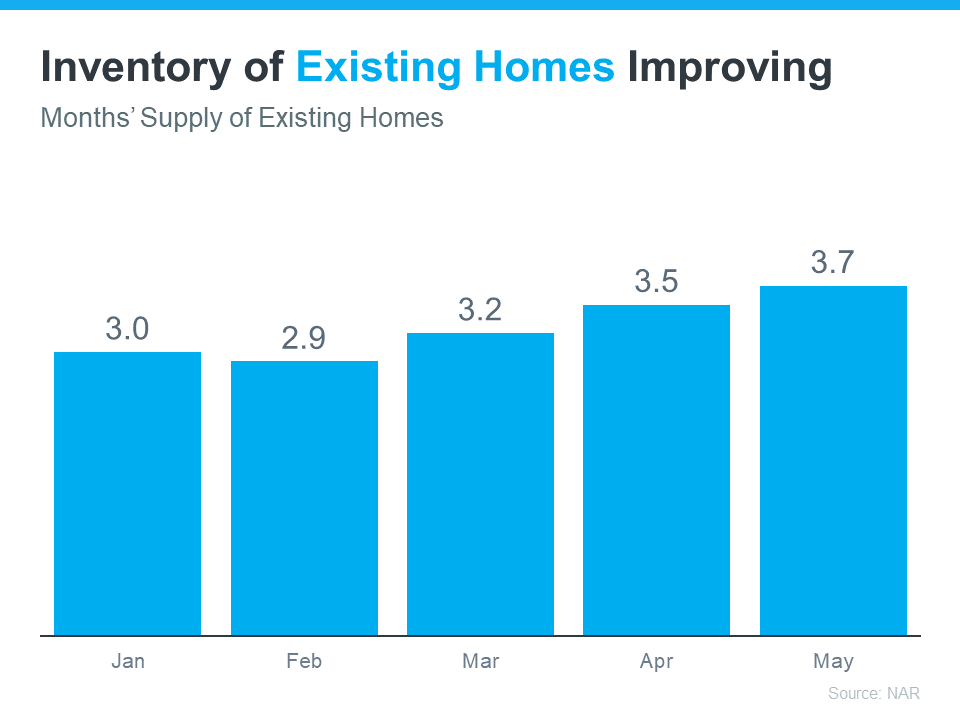
One of the most significant shifts in the market this year is how the months’ supply of homes for sale has increased. If you look at data from the National Association of Realtors (NAR), you’ll see how inventory has grown throughout 2024 (see graph below): No Caption Received

This graph shows the months’ supply of existing homes – homes that were previously lived in by another homeowner. The upward trend this year is clear.

This increase means you have a better chance of finding a home that suits your needs and preferences. And if the biggest reason you put off your home search was difficulty finding the right home, this is a big relief.

2. There’s More New Home Construction

And if you still don’t see an existing home you like, another big opportunity lies in the rise of new home construction. Builders have worked to increase the supply of newly built homes this year. And they’ve turned their attention to crafting smaller, more affordable homes based on what’s most needed in today’s market. This helps address the long-standing issue of housing undersupply throughout the country, and those smaller homes also offset some of the affordability challenges you’re feeling today.

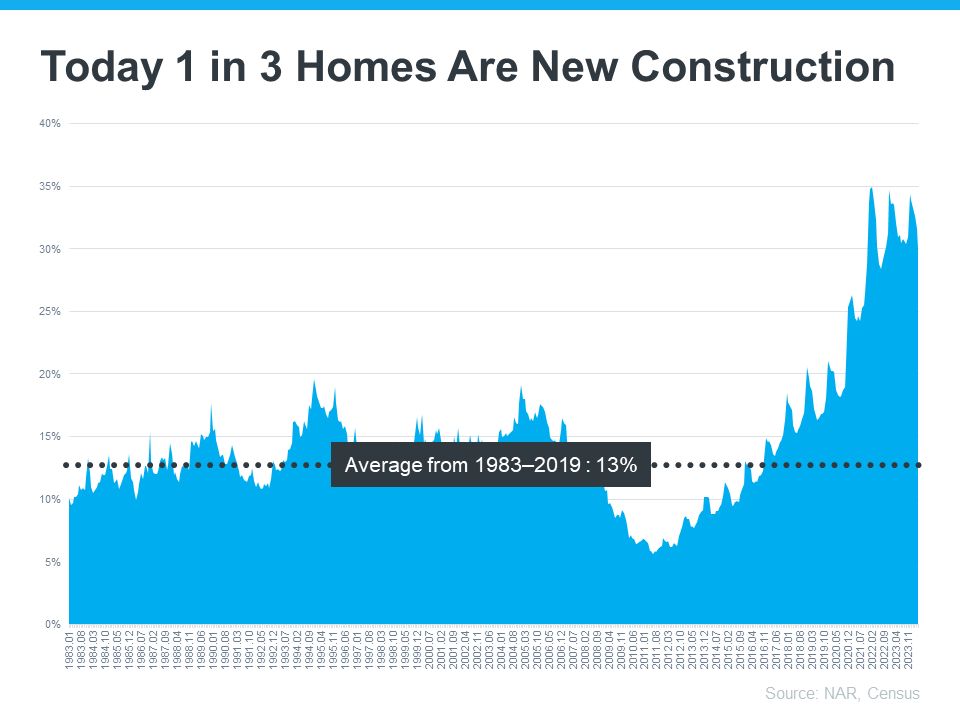
According to data from the Census and NAR, one in three homes on the market is a newly built home (see graph below):No Caption Received

This means, that if you didn’t previously look at newly built homes as part of your search, you may have been cutting your pool of options by a third. Not to mention, some builders are also offering incentives like buying down mortgage rates to make it easier for buyers to get a home that fits their budget.

So, consider talking to your agent about what builders have to offer in your area. Your agent’s expertise on builder reputations, contracts, and more will help you weigh your options.

3. Less Buyer Competition

Mortgage rates are still hovering around 7%, so buyer demand isn’t as fierce as it once was. And when you combine that with more housing supply, you have a better chance of avoiding an intense bidding war. Danielle Hale, Chief Economist at Realtor.com, highlights the positive trend for the latter half of 2024, saying:

Home shoppers who persist could see better conditions in the second half of the year, which tends to be somewhat less competitive seasonally, and might be even more so since inventory is likely to reach five-year highs.”

This creates a unique opportunity for you to find a home you want to buy with less stress and at a potentially better price.

4. Home Prices Are Moderating

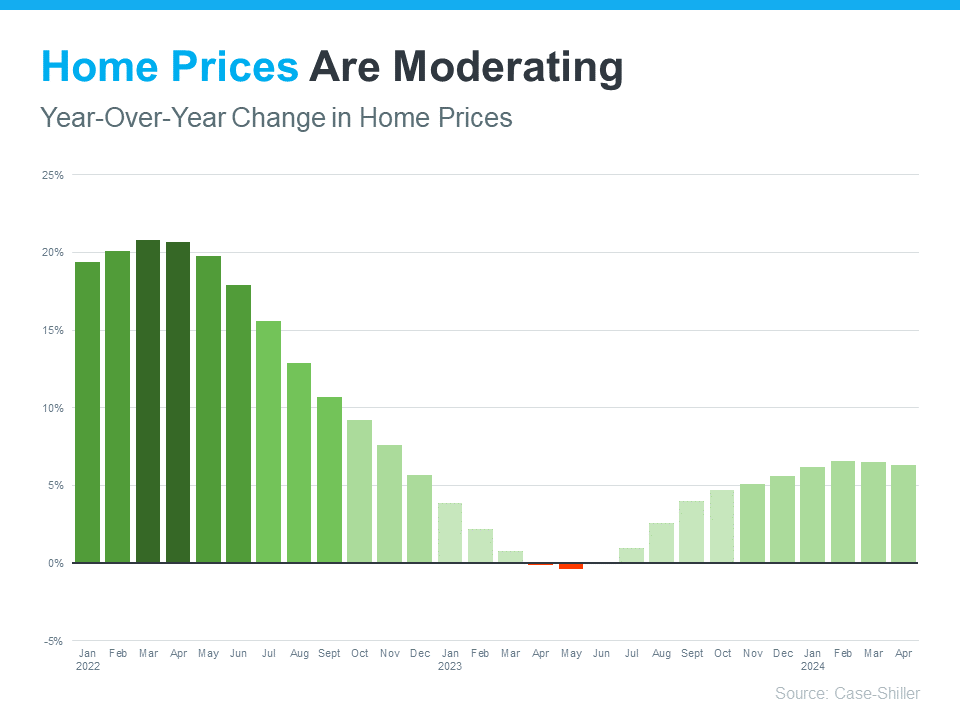
Speaking of prices, home prices are also showing signs of moderation – and that’s a welcome shift after the rapid appreciation seen in recent years (see graph below): No Caption Received

This moderation is mostly due to supply and demand. Supply is growing and demand is easing, so prices aren’t rising as fast. But make no mistake, that doesn’t mean prices are falling – they’re just rising at a more normal pace. You can see this in the graph. The bars are still showing prices increasing, just not as dramatic as it was before.

The average forecast for home price appreciation in 2024 is for positive growth around 3% to 5%, which is more in line with historical norms. That moderation means that you are less likely to face the steep price increases we saw a few years ago.

The Opportunity in Front of You

If you’re ready and able to buy, you may find that the second half of 2024 is a bit easier to navigate. There are still challenges, but some of the biggest hurdles you’ve faced are getting better as time wears on.

On the other hand, you could choose to wait. But if you do, here’s the risk you run. As more buyers recognize the shift in the market, competition will grow again. On a similar note, if mortgage rates do come down (as forecasts say), more buyers will flood back into the market. So, making a move now helps you take advantage of the current market conditions and get ahead of those other buyers.

Bottom Line

If you’ve put your dream of homeownership on hold, the second half of 2024 may be your chance to jump back in. Let’s connect to talk more about the opportunities you have in today’s market.

Why Buyers Love Pecan Plantation: Featured Home at 5707 Medinah Drive in Granbury TX

  **UPDATED 6/10/2026** Just Listed Now available in Pecan Plantation, 5707 Medinah Drive offers a rare opportunity to own a beautifully ma...