Wednesday, June 5, 2024

The Sweet Spot for Buying Luxury Homes


If you’ve been looking for a home at the high end of your market, but haven’t found the right one, you may have put your search on hold. But according to recent data, now may be the time to jump back in. Here’s why.

There Are More Luxury Homes To Choose From

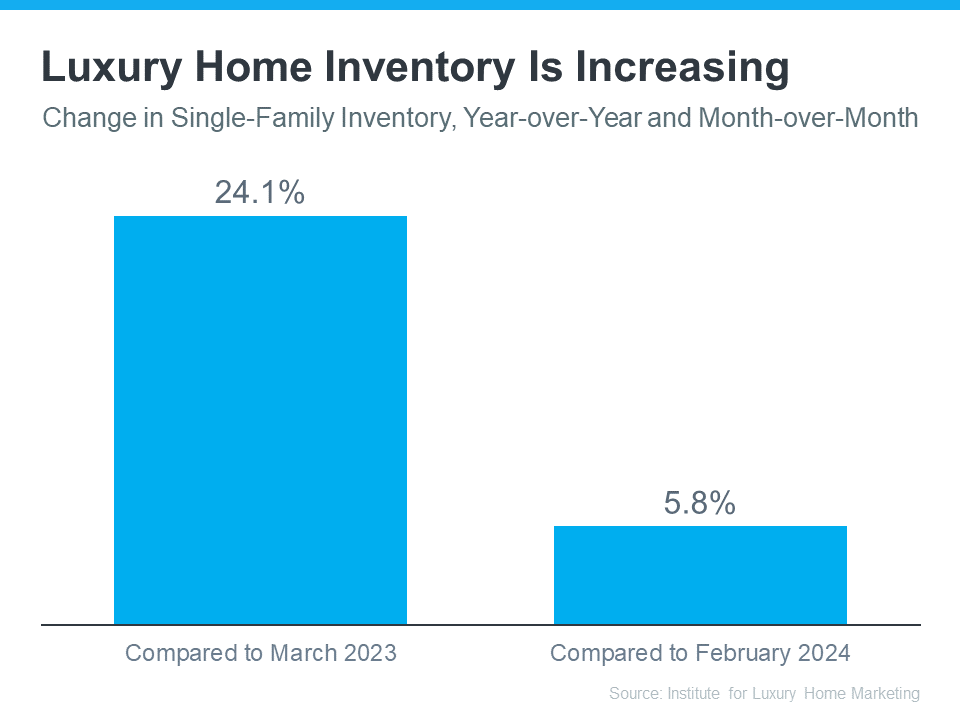
What’s considered the top-end of the market, or a luxury home, will always vary by location. But generally speaking, they’re homes that are valued in the top 5% of any given market. According to a recent report from the Institute for Luxury Home Marketing, the selection of luxury homes is increasing (see graph below):No Caption Received


As the graph shows, there are considerably more single-family luxury homes available now than there were a year ago. In fact, there are even more than there were just a month ago. This means you should have a wider variety of top-of-the-line homes to choose from, each with unique features and styles.

Whether you were searching for the latest design elements, like modern kitchens with chef-grade appliances, a breathtaking view, or integrated smart home technology, more luxury inventory means you should have an easier time finding one that matches your taste and lifestyle.

Rising Luxury Home Prices Can Help You Build Wealth

Another important factor to consider is that luxury home prices are on the rise. According to HousingWire, luxury home prices have increased by 8.7% over the past year. That’s why:

“People with the means to buy high-end homes are jumping in now because they feel confident prices will continue to rise . . . They’re ready to buy with more optimism and less apprehension.

This means buying before prices climb higher – and while more inventory is on the market – may be your sweet spot. Because home prices are rising, owning a home could help you build more generational wealth over time. On the other hand, if you wait to buy, you might end up paying more for the same home later on as luxury prices continue to rise.

Bottom Line

With growing inventory and rising prices, you have a greater selection of luxury homes to choose from and an opportunity in front of you. Want to see the higher-end homes that are available in our area? Let’s connect today.

Don’t Judge a Real Estate Agent by These 5 Outward Appearances

When it comes to choosing a real estate agent, it’s easy to fall into the trap of judging them based on superficial qualities. But deciding on an agent to work with based on their appearance is like picking a book for its cover — it’s what’s on the inside of both that matters most!

Would you rather have an agent who just looks like they could play the role of an agent on TV, or one that can actually help you find and negotiate the best possible price for the perfect house to watch TV?

Before you hire your next real estate agent, here are 5 things you might want to overlook if you want to hire the best agent for the job:

1) Their Car

If you had to choose between an agent who pulls up in a brand new Mercedes, or one with a modest minivan, there’s a good chance you might think that the luxury vehicle is a sure sign that agent is more successful, and therefore a better agent. But looks can be deceiving…

Just because an agent doesn’t drive the newest or nicest car, doesn’t mean they aren’t great at what they do! Perhaps they’re just frugal, or it’s a practical decision for their lifestyle. Judge an agent based upon their knowledge and skills, not the brand, make and model of their vehicle.

2) Their Age

If an agent seems too young, you may think they don’t have enough experience. On the other hand, if they look too old, you may wonder if they’re going to be as up to date on the latest tech or marketing tactics.

While age might impact how much experience an agent has in one way or another, it’s not always a reliable way to measure their skills, or how effectively they’ll be able to achieve your goals.

3) Their Tattoos

Visible tattoos have become a lot more mainstream and acceptable over the years, but some people still consider them unprofessional.

If you’re not a fan of tattoos, you’re certainly entitled to your opinion, but not hiring an agent just because they’re inked could be a decision you regert, ahem… regret!

4) How Attractive They Are

Studies have shown that people who are considered good looking tend to land jobs more easily and earn more money, and the stats likely hold true in the real estate industry.

No matter how pretty or handsome an agent you’re considering hiring may be, don’t let their looks blind you to a more capable agent who’s not as easy on the eyes. It’s not a beauty pageant…

5) The Brand of Their Real Estate Company

It’s common for people to judge agents based upon the brand they’re with, which is typically measured by how many for sale signs they have on lawns in the area, or how much marketing they do. Agents who are with smaller brands, or ones who don’t have as much of a presence in a certain area, are often overlooked because people presume they aren’t as successful or able to do a good job.

Agents choose which brand to affiliate with for a variety of business reasons, such as the training they offer, or the compensation and incentive packages that are available. Most agents are independent contractors, and have complete control over how they do business regardless of which company they’re with. Each individual agent is essentially their own brand within a brand, so focus on the agent and not the company they’re with.

If You Feel Stuck Renting a Place to Live, “Rentvesting” Might Be Your Ticket to Homeownership

recent Gallup Poll revealed that Americans at all income levels consider real estate the best investment you can make — over stocks, gold, savings accounts, bonds, or cryptocurrency. And it doesn’t seem to be just due to the fact that home values are at all-time highs.

They’ve been doing these surveys since 2002, and real estate has topped the list every year since 2014. Real estate was often the top choice in the previous years, too, with people only truly wavering from that opinion during the Great Recession years of 2008 to 2010 when home prices were down for a period of time.

If you already own real estate, this probably has you nodding your head in agreement. It’s easy for people who own real estate to feel that way.

But if you’re a renter, or still living at home with family, it might make you feel annoyed. You might very well agree that real estate is a great investment, but that doesn’t make it something you can easily invest in.

It’s Not as Easy to Invest in Real Estate as It Is in Stocks

Just because it’s seen as a great investment, that doesn’t make it an easy one for many people to make. Almost anyone can invest in stocks or mutual funds, even if they don’t have a lot of money set aside, since there are many price points and options to choose from in the stock market. You can find something to invest in on almost any budget, and you don’t have to buy stocks every month if your budget is tight.

On the other hand, investing in real estate does take having enough money saved for a down payment and closing costs, and the ability to pay your mortgage on a monthly basis, whether your budget is tight or not.

In addition, stocks are plentiful. You probably aren’t going to have trouble finding a stock to buy in any given price range. But real estate, especially right now, is significantly affected by supply and demand. There are only so many houses for sale in any area and any given price range. This not only makes real estate pricier, but also more difficult to successfully buy.

It’s Also Not “Just” an Investment for Most People…

Another aspect that makes investing in real estate more difficult for many people is that they aren’t just investing their money, they’re also looking at it as buying a place to live in and call home.

People don’t have to like the location of a company, or what their logo looks like in order to invest in it. But with real estate, many people care an awful lot about where the house is located, what style it is, what size it is, and how nice (or not) it looks. This further impacts how many options people will consider buying in the real estate market.

There’s absolutely nothing wrong with caring about where you live, or having a wishlist of things you want in a home. Everybody wants as nice of a location and house as possible to call home. It’s an extension of who you are, and often a source of pride and identity.

But waiting until you can buy a house that meets your wants and needs may be causing you to lose out on precious years of investment gains, which could ultimately help you buy the house you truly want.

“Rentvesting” Might Be Your Ticket to Homeownership!

People live where they live for a variety of reasons — like being close to work or family — which usually impacts where they might consider buying a house.

So, if there aren’t any houses for sale that meet your budget or criteria within a reasonable area around where you want to live, or there’s too much competition and it’s difficult to successfully buy one, there’s a good chance you might choose to just continue renting, or living with family.

If that’s the situation you find yourself in, but you want to start reaping the benefits of investing in real estate, you might consider “rentvesting,” which is a trend growing in popularity according to this realtor.com article.

Rentvesting is a term used to describe when someone continues to rent in the area they currently live in, which is often pricier or more difficult to buy a property in, and buying a property in a more affordable area that they rent out. Just because you rent the home you live in, that doesn’t mean you can’t start your journey into homeownership by buying a place you won’t live in!

If buying a home in an area you want (or need!) to live in isn’t affordable or achievable due to stiff competition or a lack of supply, look into buying an investment property in an area where there isn’t as much competition, and prices are lower.

While it may not be the traditional path to homeownership, it’s certainly better than trying to save enough money to be able to buy property in the area you currently live while renting. It’s difficult to outpace the market unless you’re in the market. Putting yourself in a position to reap the benefits of appreciation, rental income, and equity built as your mortgage is paid down using your tenants’ money is a great way to improve your ability to buy the home you truly want in the future.

If this sounds appealing to you, research some areas that appeal to you, or ask your favorite real estate agent for their suggestions. Agents will not only be glad to help you discover potential areas, but also the best agents in that area to help you navigate the search and purchase process, as well as potentially managing the property if it is too far for you to manage yourself.

The Takeaway:

A recent poll shows that Americans across all income levels view real estate as the best investment, outpacing stocks, gold, savings accounts, bonds, and cryptocurrency.

While stocks are accessible to nearly everyone, investing in real estate typically requires more savings, and comes with more supply and demand challenges, which makes it more difficult to invest in than other options. But another issue for many people is that they’re often focused on buying a home that fits their personal wants and needs, rather than looking at it as purely investment, which can lead to them continuing to rent because they can’t afford to buy what they truly want in a home.

For those unable to buy a home in an area where they want or need to live, “rentvesting” might be worth considering. This is a growing trend where you continue renting in your current location, while buying an investment property in a more affordable area. This approach allows you to benefit from real estate investments without waiting to buy a home in a high-demand area.

If You Feel the Need to Make a “Lowball” Offer on a House You Want to Buy, Here Are Some Things to Consider Before You Do

As a buyer, you want to get the best deal on your home, and sometimes offering less than asking price — aka “lowballing” — can help you score that deal.

But there is a right and a wrong way to negotiate a lowball offer, and if you want to get your home at a bargain price, you need to do it the right way.

So what, exactly, does that look like?

recent article from realtor.com outlined best practices for offering less on a house, including:

  • Know the market. Lowball offers tend to be successful when the buyers have the upper hand. So, before you submit a less-than-listing-price offer, it’s important to know whether you do have the upper hand. Talk to your real estate agent about the overall market and the specific house you’re considering buying. Is it a seller’s market with a lot of competition for properties? Is the home newly listed? If so, a lowball offer probably isn’t going to fly. On the flip side, if you’re in a buyer’s market, or if the home has been listed for months, you’ll likely have more room to negotiate on price.
  • Be respectful of the sellers. There’s making a low offer… and then there’s making an offer so low that it’s insulting to the sellers. Make sure your offer isn’t so low that it makes the sellers feel disrespected, and try to express your appreciation for the property and how excited you are at the potential of buying it.
  • Have your agent reach out to their agent. Before making what the sellers may feel is a lowball offer, have your agent contact the listing agent to find out as much as possible about the sellers — like why they’re selling, and if they’ve turned down any other offers, for example. Those insights can tell you a lot about whether it makes sense to come in with a low offer at all, and can potentially give you a feel for how low you can come in, as well as increase the likelihood of your offer getting accepted.

Selling Your Home? Here’s How to Spark a Bidding War

When you sell your home, you want to sell it for as high a price as possible, and there are few things that drive up the price of a home quite like a bidding war.

While you can’t force people to bid on your home, there are things you can do to make your home more appealing to encourage more offers, and start a bidding war in the process.

So what, exactly, are those things?

recent article from realtor.com outlined ways sellers can spark a bidding war for their property, including:

  • Price your home to sell. Many sellers think that listing your home at a high price will generate a higher sale. But often, pricing your home lower (even below the true market value) can generate more interest and more offers, which can spark a bidding war and drive the price up. Talk to your agent about pricing strategy, and consider listing at a lower price in order to sell for a higher one.
  • Set a deadline. FOMO (fear of missing out) is a real thing, and it certainly affects home buyers. Setting a deadline can be an effective strategy for driving offers, because people won’t want to miss out on their chance to buy your property, and the more offers you get, the higher the likelihood of a bidding war.
  • Get the right listing photos. Many buyers rely solely on the internet to find their dream home. If you want to get multiple offers on your property, you need to make sure that the photos you list online are going to get buyers’ attention and generate interest. Get professional photos taken, and ask your photographer to capture some interesting, unique shots. Make sure to display your best photos first in the gallery of images online, as many buyers won’t scroll through all of them, especially if the first pictures don’t capture their attention.

Scroll Your Way to the Perfect Home: Tips for Turning “Dreamscrolling” Into Reality

What’s your “dream home” look like? Can you picture it vividly, or is it more of a general idea? Or perhaps simply owning any home would be a dream come true for you!

The term “dream home” gets thrown around a lot by home buyers and real estate agents, but it’s such a subjective term and will mean different things to each person.

But whatever your vision of the perfect home is, dreaming about it is not only common, it may also help you achieve your dreams!

What Is “Dreamscrolling?”

According to a recent study, the average person spends about two and a half hours “dreamscrolling” everyday, looking online at things they’d like to own someday. The average time spent adds up to 873 hours per year, which is 36 total days of scrolling the internet for things a person would love to buy, but can’t yet afford.

When you look at it that way, it sounds like an awful lot of wasted time! But that’s not how most people see it…

Seventy-one percent of those surveyed said that they felt it was time well spent, because it motivates them to reach their financial goals, and 69% see it as an investment in themselves. (Although their bosses may disagree, since half of the respondents claimed to spend hours per day doing so at work!)

While their rationale may not hold any weight with bosses, here are the main reasons respondents said that “dreamscrolling” is beneficial to them:

  • 67% claimed that it helped them envision what they want in life.
  • 42% said it was useful in planning for their ideal retirement.
  • 56% believe that it helps them be smart with their money, and make better choices about what to (and not to) spend it on.
  • 30% stated that it helped them avoid making unplanned purchases or going into debt.
  • 25% use it as a way to better plan and achieve their financial goals.

That being said, the survey also shed some light on what people were typically spending their time scrolling for, including:

  • Clothing, shoes, and accessories (49%)
  • Technology and gadgets (30%)
  • Home décor and furniture (29%)
  • Beauty and self-care products (23%)
  • Things for their pets (19%)

Unfortunately, those types of things aren’t likely to help someone achieve their ideal life, or retirement. Yet more than half of those surveyed claimed to have many things saved in shopping carts or open tabs on their screen, and estimated it would cost about $86,593.40 on average to afford everything they currently have saved.

However, one in five people claimed that they were “dreamscrolling” for their dream home! Now that’s a better way to focus time and attention, if you’re truly trying to envision and plan for living your best life, and ultimately your retirement! Perhaps the folks who have nearly $90,000 worth of consumer goods saved in their carts should rethink those purchases and apply that money to a down payment on a house!

Some Do’s and Don’ts of “Dreamscrolling” for Home Buyers

“Dreamscrolling” can be a great way to make your dreams of homeownership a reality, if you do it thoughtfully! If you’re one of the one in twenty people scrolling through listings looking for your dream home, here are a few things you should avoid doing in order to make it as productive as possible:

  • Looking at homes you can’t expect to ever afford. It’s easy to envision yourself living like a movie star in a mansion, but it’s another thing to actually be able to afford that lifestyle unless you hit the lottery, or land a leading role in the next blockbuster movie. Scrolling through homes that would obviously be a dream home, but aren’t attainable will make it nearly impossible for you to appreciate a dream home that’s within your budget. Feel free to aspire and look at homes that are somewhat of a stretch, but be careful not to fill your mind with visions of grandeur that very few people can actually afford.
  • Waiting for the picture perfect home to hit the market. It’d be ideal if you could find a home that meets every single thing on your wishlist, but the reality is, no matter how much money you can spend, there’s rarely a house that checks off every box.
  • Not taking any actual steps to buy a house. Unfortunately, you can’t just dream your way into a home. At some point you need to take action, not just scroll through listings.

In order to make your “dreamscrolling” more productive and turn your hopes into dreams, here are a few things you can do to make it happen:

  • Find out how much you can currently afford by getting preapproved with a mortgage lender. You might think you know how much you need to afford the house of your dreams, and you might even think you know how much you can actually afford, but (at least for many buyers) the first step is finding out how much a mortgage lender will approve you to spend.
  • Find out how much different your financials would have to be to afford your dream home. If you’re determined to buy a house in a price range that is higher than a lender approves you to spend, ask them to advise you on what it would take for you to be able to afford the higher-end home. Is it within reach if you can get yourself a promotion, or take on a side hustle? Do you just need to save a little bit more money for a down payment? Is there a distant rich uncle in your life who told you he’d be leaving you a ton of money when he dies? Or is it more of a pipe dream than a realistic dream for you to be able to afford what you’ve set your sights on?
  • Focus on what you can afford now, or in the near future. Waiting to have enough money to afford what you’ve determined is your dream home could take years to save up enough for a down payment, and the ability to handle the monthly payments on your dream home. And, as you’re waiting to have the money you need, there’s a good chance the value of those homes will increase, making it a constantly moving target. You’re probably better off adjusting your criteria and expectations and finding a home that you can appreciate for now. As you build up equity, perhaps it’ll allow you to eventually buy your true dream home… or maybe you’ll find that with some personal touches, the one you buy is your dream home!

The Takeaway:

“Dreamscrolling” is a new term to describe when people spend time looking online at things they’d like to own someday, but can’t afford yet. According to a recent study, people are spending an average of 2.5 hours per day doing it, which amounts to 36 days per year spent dreaming of what they want to buy.

One in twenty of those surveyed claimed they used “dreamscrolling” as a way to find their dream home. While it can be an inspirational and potentially useful approach, if you truly want to buy your dream home you need to take action by finding out how much you can truly afford now, and being realistic about what constitutes a dream home by focusing on homes within your budget.

Saturday, June 1, 2024

The Power of Landscaping: How to Increase Your Property’s Value with Simple Updates

April 23, 2024 by 

Updated on May 23rd, 2024


With the peak of homebuying season just around the corner, it’s more important than ever to make your house stand out. One of the best ways to make this happen is by upgrading the landscaping around your home. From lush greenery to functional outdoor spaces, strategic landscaping updates can significantly elevate the overall allure of a home while potentially adding value

In this Redfin article, we’ll explore various landscaping projects that not only beautify outdoor spaces but also increase property value. Whether you’re looking to sell a house in Los AngelesBoston, or anywhere in between, these landscaping projects will help your home stand out.


1. Install a deck to expand outdoor living spaces

Adding a deck to your property creates a versatile outdoor living area that appeals to potential buyers. Whether it’s a cozy platform off the kitchen or a sprawling multi-level deck overlooking the backyard, this addition provides space for entertaining, dining, and relaxation. A well-designed deck can be transformed into an outdoor oasis, seamlessly extending the living space of the home and making it more appealing to homebuyers.

2. Plant trees to enhance natural beauty and shade

Strategic tree planting not only enhances the aesthetic of the property but also provides practical benefits. Mature trees offer shade, which can reduce energy costs and increase comfort during hot summer months. Additionally, trees contribute to improved air quality and curb appeal, making them a valuable asset that adds to the property’s appeal and value.

3. Utilize xeriscaping for sustainable and low-maintenance landscaping

Xeriscaping, or drought-tolerant landscaping, is gaining popularity due to its water-saving benefits and low-maintenance requirements. By incorporating native plants, succulents, and gravel or mulch beds, homeowners can create visually appealing landscapes without running up the water bill. This is especially true for homebuyers in warmer climates. Xeriscaping not only reduces water consumption but also enhances property value by showcasing eco-friendly and sustainable landscaping practices.

4. Add a sprinkler system for efficient water management

Investing in a modern sprinkler system ensures efficient water management and optimal lawn care. Smart irrigation technology allows homeowners to customize watering schedules based on weather conditions and soil moisture levels, reducing water waste. Sprinkler systems not only preserve the health and vitality of the landscape but also enhance the property’s appeal and desirability efficiently.

patio with furniture and lights

5. Upgrade your lighting to illuminate outdoor spaces

Strategically placed outdoor lighting enhances safety, security, and ambiance, increasing the property’s overall value. Pathway lights, uplighting for trees and architectural features, and accent lighting for outdoor living areas create a welcoming vibe and extend the functionality of outdoor spaces into the evening hours. Thoughtfully designed lighting highlights the beauty of the landscape and adds curb appeal.

6. Keep a well-maintained lawn

Regular lawn maintenance, including mowing, fertilizing, and aerating, is essential for cultivating a lush green lawn that enhances curb appeal. Well-manicured lawns create a visually pleasing backdrop for the property and contribute to a positive first impression, making this spring the perfect time to get your grass looking spectacular. Investing in professional lawn care services ensures optimal turf health and adds value to the overall landscaping package.

Projects to avoid

While landscaping updates can increase property value, certain projects may not provide a favorable return on investment. Avoid over-the-top landscaping that requires high maintenance and may overwhelm potential buyers. Additionally, stay away from  invasive plant species or landscaping features that detract from the natural beauty of the property or make it less functional.

From functional outdoor living spaces to eco-friendly practices, strategic landscaping updates can significantly increase the value of a property. There’s no need to do anything over the top: Just a few simple changes and additions can make a big difference. By investing in these landscaping updates, homeowners can maximize their property’s value and appeal to prospective buyers.


Chibuzo Ezeokeke

Chibuzo Ezeokeke

Chibuzo is part of the content marketing team and enjoys writing about local insights and home improvement. His dream home is a Mediterranean-style house with a large kitchen and plenty of windows.

Feel like the Real Estate Market Is Out of Control? Focus on the Things You CAN Control as a Buyer

There’s no denying that it’s been a tumultuous few years for homebuyers. Between rising mortgage rates, low inventory, and a changing competitive landscape, it can feel like there’s a lot of things out of your control.

But while there may be many things you can’t control as a buyer, there are certainly things that are in your control, and focusing on those can help put you in a better position to successfully buy a home.

So what, exactly, are those things?

recent article from realtor.com outlined elements that are in homebuyers’ control, even in this turbulent market, including:

  • Your price range. While your lender (if you’re buying with a mortgage) determines how much you can spend on a home, you get to decide how much of that amount you actually spend, and can adjust your home search based on the price range that fits your criteria. That way, you’re not seeing properties that are above the upper limit you’re comfortable with, which will not only save you time and energy, but can also help save you from falling in love with a property you can’t afford.
  • What kind of home you’re going to buy. In order to meet rising demand, building of new houses has ramped up in recent years. Often, buying a newly constructed house can be a better fit for buyers than an existing build. Why? Because builders often offer incentives to get people to buy, which can help you save money on your purchase, and because everything is new, you don’t have to worry about replacing anything soon after you move in, which can also save you money.
  • Your real estate agent. As a buyer, you get to decide the real estate agent you work with, which is arguably one of the most important choices you’ll make during your home search. The right agent can make a huge difference in the homebuying process, making it easier, faster, and less stressful, so make sure to choose wisely.


Why Buyers Love Pecan Plantation: Featured Home at 5707 Medinah Drive in Granbury TX

  **UPDATED 6/10/2026** Just Listed Now available in Pecan Plantation, 5707 Medinah Drive offers a rare opportunity to own a beautifully ma...